"I will never kick a rock"

Category archive

Uncategorized

Mud Cracks at Cave House – 12-12-25

in Uncategorized by

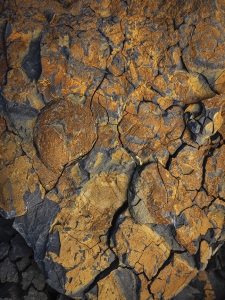
Mud Cracks at Cave House

The Mountain Eagle

Robert and Johanna Titus

August 9, 2019


We recently visited the Cave House Museum of Mining and Geology, and we would like to continue writing about it today. The Museum is part of a 50-acre complex of industrial and educational facilities located well east of Howe Caverns. When you visit, we know that you will want to descend into the old Lester Howe cave. Back in his day you could take quite the tour but now you can only visit what was the beginning of Lester’s cave. You need to go to Howe Caverns itself for the long tour. Still, even If this is just a short tour, there are good things to see. Almost as soon as we entered the cave our guide shined his flashlight upon the thinly laminated limestone strata that make up the cave walls. There we immediately saw something that was very familiar to us. The cave is composed of a unit of rock called the Manlius Limestone, something that we see all across eastern New York State. It’s thinly bedded, fine grained strata took us back about 420 million years to a time when most of New York State was submerged by the shallow waters of something called the Helderberg Sea.


This was a very warm sea; North America lay just a little south of the equator. The Cobleskill area was enjoying a very tropical climate at that time. The thin laminations of the Manlius tell us a lot about what the whole region was like back in what geologists call the early Devonian time period. The thin strata here are the products of what are called algal mats. Once these thin strata were composed of sediments laying upon a mud flat and sheets of primitive algae grew across their surfaces. You might have to travel as far as the Persian Gulf so see something like this today.

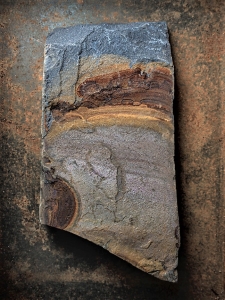
But there was much more to see here. Our guide shined his light on the cave ceiling and we immediately recognized one of those little wonders of geology; something called mud cracks. Mud cracks are polygonal imprints that formed at approximately the time of deposition. They speak to us of single moment in time all those million years ago. Mud cracks are also called desiccation cracks, which is to say that they formed at a time when the sediment was baking in the sun. Seas come and go; this was a time when the water had drained way. But there was more.

We looked up and gazed at that surface. To see such a rock is to literally see the past. Now we became time travelers, and in our mind’s eyes, we went back those millions of years and saw that mud flat. We had arrived at noon on a clear day in early August. The Sun’s heat seemed to pound down on the surface. There was not even the slightest of a breeze and the hot air pooled on the ground. In the distance, we could see rising currents of air distorted by the heat. This is the stuff of mirages and near the horizon there was the illusion of an expanse of water.

But there was no water. In fact, recent months had witnessed a terrible drought. The ground was bare marine sediment and it positively blistered in the sun. Over time, all moisture had been baked out of the ground. The sediment then slowly shrank and, as it did so, it began to contract into those polygonal masses bordered by polygonal cracks: classic mud cracks. We looked around again; an endless flat expanse spread out all around us. It was a dead landscape. We felt very small and alone in this vast, inhospitable Devonian land.

Then we turned our eyes away from the cave ceiling and suddenly, all around us, was the coolness of a dimly lit cave. This is the Cave House of modern times, but certainly not as it has always been.

Contact the authors at randjtitus@prodigy.net. Join their facebook page “The Catskill Geologist.” Read their blogs at “thecatskillgeologist.com.”


Cold Snaps? Dec. 6, 2025

in Uncategorized by

Cold snaps?

Robert and Johanna Titus

The Catskill Geologists; The Mountain Eagle; Nov 29, 2019


We have seen some pretty cold weather lately (2019). November 12th and 13th witnessed what was called “historically cold weather.” Forecasters warned that this may be repeated, perhaps many times this winter. Specifically, they predict that cycles of cold Jet Stream air masses will pass slowly across North America during this year’s winter. Each pass is expected to bring similar “cold snaps.” Each cold episode can be an alarming event. How many times have you heard people say, “What happened to climate warming?” That’ a fair question, so we would like to give answering it a try in today’s column. Our argument is that there is, indeed, an explanation for this weather, and it may actually be that has been caused because of, not despite global warming. Obviously, we have a lot of explaining to do.

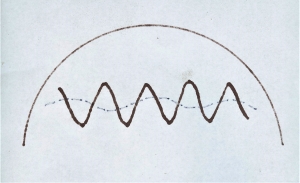
Let’s begin with a short overview of what the jet stream is. In North America the jet stream is a massive, high-altitude eastward flow of air lying at the boundary the Arctic and the Mid Latitudes. The stream typically undulates up and down through broadly prominent ridges and troughs. See our first illustration. It’s the temperature difference between the cold Arctic and warmer Mid Latitudes that drives the jet stream; the greater the difference, the faster the jet stream. That difference drives the cold troughs and warmer ridges across America. That brings a lot of weather to us, especially as it did in what came to be called “Novembruary.”

   Normal jet stream, Illustration courtesy of Wikimedia Commons.

In recent decades there has been a consistent and pronounced warming of Arctic realm climates. That’s something we remember that climate scientists predicted at least 30 years ago. At the same time the mid latitudes have only warmed a little, so the differences between the two realms have been greatly reduced. That has, as would be expected, slowed down the movements of those ridges and troughs. What results is a lot like what happens to auto traffic when it is slowed down. The cars behind catch up with those in front. The ridges and troughs become slower and more closely spaced. But there is more; in order to keep all those air masses moving, both the ridges and troughs must become more expansive. See how, in our second illustration the ridges and troughs are so accentuated. We call this a higher amplitude.

High amplitude jet stream. Courtesy US Geologic Survey

Each trough is a mass of slow moving very cold weather. Just what we saw in middle November. Each trough becomes at least a few days of very cold weather. Each expands far to the south and spreads across a vast expanse of our continent. We all, especially in the south, find this most unsettling. But, as you can see, it’s all a very explainable phenomenon. We think it is something that you should understand.

In the end we are hoping that you will pay more attention to the jet stream part of your local weather forecasts and have a better understanding of what they have to tell.

Contact the authors at randjtitus@prodigy.net. Join their facebook page “The Catskill Geologist.” Read their blogs at “thecatskillgeologist.com.”
   Normal jet stream, Illustration courtesy of Wikimedia Commons.


Twenty One Trees – Nov. 27, 2025

in Uncategorized by

“Twenty-one trees”

The Catskill Geologists

Robert and Johanna Titus


We belong to and are active with a large number of local civic groups. Such memberships are rewarding things to do, and they involve us directly with our community in very special ways. We work actively with the Mountaintop Historical Society, the Green County Historical Society, Cedar Grove — the Thomas Cole National Historical Site, Olana, the Woodstock Land Conservancy, WIOX FM and numerous others. Each serves the needs of the broader community (mostly) on a volunteer basis, that’s something that makes the Catskills and the Hudson Valley great places to live. As active scientists, we bring something special to each of these groups; we plug them into their natural histories. It’s a privilege and even an honor to do so. These are interesting and fun endeavors. We urge you to join some of these groups yourself.

Let’s talk about one of the projects that we have been working on recently. That involves the Mountain Top Arboretum, the only public garden/arboretum in all of the Catskills Park. It’s been around since 1977 and has been dedicated to displaying and managing a forest ecology native to our portion of the Northeast. During this time the Arboretum grounds have grown from 7 to 178 acres of forest and meadow. As any arboretum does, it maintains a host of tree species, most of them are native but some are special exotics. We will describe some of these special ones in future columns.

Recently the Arboretum has built and opened a new Education Center. In association with that event, they have sponsored a general survey of the natural history of the Arboretum grounds. They enlisted a number of specialists to study the Arboretum landscapes’ forest history, animals, birds, insects, geology and much more. They approached us to do the geological part and we gladly agreed. It involved a fair amount of work and attendance at a number of planning sessions, but it was all for a good cause. One of the results was a voluminous natural resource inventory which came out last April. Currently, that isn’t for sale to the general public.

But, more recently, a second volume was issued and that is the one we would like to highlight today. It’s entitled “TWENTY-ONE TREES” and it is available for you, the general reader. It’s beautiful book with many fine photographs by Rob Cardillo. The book title refers to the 21 species of native trees that provided the lumber for the Education Center. We wrote an early chapter where we introduce our readers to the geological history of the Arboretum as it can be seen when walking around the grounds, we take people to some of the best bedrock exposures and from there we journey into the Devonian past. We visit the Catskill Delta and some of the streams that flowed by way back then. Then we skip through about 375 million years and visit the Arboretum during the Ice Age. Again, we walk the grounds again and point out the landscape features produced by the ice.

Forest historian Dr, Michel Kudish then takes over and leads readers through the area’s forest history. Mike describes a forest that is gradually recovering from a history of 19th Century damage done by the tanning industry and farming. Then he describes some of the Catskills oldest peat bogs, dating all the way back to the very end of the Ice Age.

The bulk of the book is devoted to well-illustrated descriptions of the mostly native species of trees found at the Arboretum. Ron Cardillo’s unforgettable year-round photography is the highlight of the book. We recommend it strongly for all of you fascinated by the natural history of our Catskills. Don’t forget, Christmas is coming up and you can only get the book at the Arboretum. It’s a good excuse for a visit. Bring the kids.

Contact the authors at randjtitus@prodigy.net. Join their facebook page “The Catskill Geologist.” Read their blogs at “thecatskillgeologist.com.” Learn more about the Mountain Top arboretum at mtarboretum.org.
An Outcrop near Prattsville

in Uncategorized by

An outcrop near Prattsville

The Catskill Geologists; The Mpu8ntan Eagle

Robert and Johanna Titus, Nov. 8, 2019


We are guessing that, almost every day, you drive past roadside outcroppings on your routine travels. And we are guessing that you rarely take much notice of them. They are, after all, just rocks. Well, we are in the business of noticing outcrops and sometimes they are quite interesting. We saw one recently on our way home from an event in Prattsville and it was very stimulating. You take Rte. 23 east from Prattsville and turn left where the highway heads toward Windham. Go north about ¾’s of a mile and there it is.

The upper reaches of the strata are fairly run of-the-mill Catskill sandstones. We didn’t find them all that interesting; it was what we saw below that caught our attention. There, we found about ten feet of poorly stratified, shaley rocks. We are just a little bit uncomfortable in using the word “shaley.” Proper shales are horizontal strata which are also thinly laminated. These were horizontal enough but gently crinkled. Most shales are also usually black or dark gray; these strata were brick red. One of us tugged on his beard; the other furrowed her brow. Both of us were puzzled.

Then it all got worse; at the very bottom of the outcrop the strata were green, not a bright green but a strong enough hue. We could not help but to take special notice of this seemingly out of place color. Green is a rare tint in Catskills strata. But, no matter, red and green it was; there had to be an explanation for these perplexing colors. There was.

Geologists, all around the world look at red strata and reflexively react by uttering the word “terrestrial.” Brick red is the typical color of terrestrial sediments, especially in tropical landscapes. We knew that all these deposits had formed on something called the Catskill Delta. And we also knew that way back then, during the Devonian time period, that delta had lain about 20 degrees south of the Equator in a definitely tropical setting. This outcrop was a partial cross section of that delta, but could we be a little more specific?

We at first wanted to call these red strata paleosols – that word means fossil soils. But we were uncomfortable with that term, fossil soils are usually a good bit more structured than these were. They often display the kinds of A, B and C horizons of typical soils. Ours didn’t, so what was it? Once again beards were tugged and brows were furrowed. Our final answer involved just the least bit of waffling; we called all this an overbank deposit, not a soil. These fine-grained strata had been deposited as some sort of floodplain sediments and then only just a few soil forming processes began.

All this led to our final story which took us back to a time of drought on the Devonian Catskill Delta. Those floodplain deposits had dried out, exposing them to a lot of oxygen. That oxygen combined with iron to form an iron oxide mineral called hematite which is brick red. That colored these future rocks. But, even during a bad drought, there would still be some water deep in these soils. The water table had been about eight feet deep and down there, without much oxygen, the soils turned green.

So, we have what scientists call a hypothesis to explain what we see along the road. A hypothesis makes sense and is consistent with the evidence. But we are not absolutely sure that we are right and that is why we can’t yet call it a scientific theory. Hypothesis or theory: there is a difference. We don’t know which but still, it is a nice story.

Contact the authors at randjtitus@prodigy.net. Join their facebook page The Catskill Geologist,”


Standing Stones

in Uncategorized by

Standing stones – Wisdom of the crowd?

The Catskill Geologists

Robert and Johanna Titus


Have you ever seen the Devil’s Tombstone? It’s quite a rock—located at Devil’s Tombstone Campground on Rte. 214 near Stony Clove. It’s right next to the highway and there is good parking, so it is easy to get to. Its peculiar name is easy to explain; the rock looks so much like a very large tombstone. However, we doubt that the Devil is buried there.

Such a rock is often called a monolith. It must be about ten feet tall and a few feet thick. It is composed of typical Catskills bluestone. These strata were once sands at the bottom of a Devonian aged river channel. Now these strata make up a boulder, standing on end. But, what exactly is the Devil’s tombstone? It seems that there should be a story here. Well, actually there are several stories. The first one is the most obvious; it is the notion that humans lifted the rock into its current vertical inclination—perhaps for religious or astronomical reasons.

The monolith notion is what scientists call a hypothesis. A hypothesis is an idea which has been advanced as a possible explanation for a scientific problem. A hypothesis needs to be tested through further observations. As more is learned, a hypothesis begins to look better or, if things go poorly, it can become falsified. After being sufficiently tested, a hypothesis may be elevated in science to the level of scientific theory. In science, the word carries a great deal of worth; a theory is considered the highest level of proof in science; it is viewed with great confidence.

But, in science, it is always thought that many hypotheses are better than just one.  The more, the better. What about the Devil’s Tombstone? Are there other hypotheses or is the human monolith concept the only one? There is at least one other; boulders of this sort can be the products of ice age activities. Advancing glaciers can be easily imagined as picking up and shoving forward boulders of this size. When a glacier reaches its farthest advance, it will halt and, sometime later, begin melting away. A boulder can be left behind, lying in any inclination. Many will lie at angles less than 90 degrees, but a few, logic tells us, should indeed, be at 90 degrees.

So, which is it? Were standing stones all or mostly all put in place by humans or were all or most of them bulldozed and dropped in place by glaciers? Well, before we decide, we have to learn as much as possible about standing stones and that’s where you come in. Do you know of any standing stones? Can you tell us where to go and see them? Do you know of any leaning stones? We need to see these too; in fact, those may be of more importance.

When we know about these boulders, then we can visit them and ascertain their geologic context. If all of them were found with glacial deposits called moraines, then that would be an indication an ice age origin. If most or all, lie outside of glacial deposits then that would be consistent with the human origin hypothesis.

The point is that all of you can find more of them than just the two of us. When we have a lot of them to look at, then we can gather enough evidence to make a good, sound conclusion—a theory.

So, think about it, we need your help.


==================================================================

Contact the authors at randjtitus@prodigy.net. Join their facebook page “The Catskill Geologist.” Read their blogs at “thecatskillgeologist.co

A Plowed Field 11-3-25

in Uncategorized by

Geology of a plowed field?

The Catskill Geologists

Robert and Johanna Titus


We are not farmers, so we don’t know why farmers plow their fields at this time of the year. But, as geologists, we do know what to look for when they do. In fact, it is not unusual for us to slow down and take a good look at a newly plowed field; Whatever are we looking for? Well, not surprisingly, we are exercising our trained eyes. And today, we would like to help you do the same.

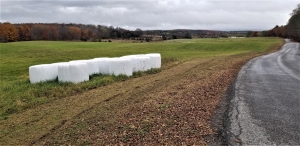
Recently we were driving south, down Rte. 9G toward Hyde Park, when we saw the freshly plowed field in our first photo. Take a look; what do you see? Or, rather, what do you not see? We always like to say “the hardest thing to see in science is that which is not there. Take another look at our photo: what is not there? You are probably going to kick yourself when you miss this.


The answer is that there are no rocks lying on the ground. Isn’t that just a little strange? What happened the last time you did some digging? You probably hit “two rocks for every dirt,” right? So, what happened to those two rocks? Actually, they were never there. It turns out we had been driving along an old glacial lake. Lake deposits are almost all silt and clay. There are no rocks. That glacial lake has a name; it was Glacial Lake Albany and, back at the end of the Ice Age, it flooded much of the Hudson Valley, including our location along Rte. 9G. Its waters are long gone; they drained away. But the old silts and clays are all still there. One way to identify them is to wait for plowing and watch for that absence of cobbles. We like to pull over, get out and, in our mind’s eyes, gaze at the lake that we and perhaps only we, can envision.

Let’s take you to another location along the highway, Rte. 9, just south of Rhinebeck. Now your newly trained eyes probably won’t have much trouble in seeing what is there: rocks, and lots of them. What happened here? Why is this so different? This is another wide flat landscape, and you might be tempted to interpret it as another old lake bottom. But, don’t forget all those silts and clays of lake bottoms. This flat surface is quite likely a floodplain. Flood plains often are stony like this one. Floodplain deposits are generally deposited by flowing river waters. There are a lot more floodplains on his planet than glacial lakes so there is no surprise here.


So, why are we talking about sediments east of the Hudson; that’s pretty far away. Well. don’t forget we are here to train your eyes. We would like it very much if you began paying attention to flat landscapes, especially when they are plowed fields. There will be a lot of them come next spring, and that likely includes places around where you live.

Contact the authors at randjtitus@prodigy.net.  Join their facebook page “The Catskill Geologist.”

Family Fun at Cathedral Gorge – N0ov 21, 2025

in Uncategorized by

A Family Fun Fest at Cathedral Gorge

The Catskills Geologists; The Mountain Eagle Oct. 18, 2029

Robert and Johanna Titus


Our grandchildren are getting older now and they live so far away. We don’t do as many things with them as in the past. It’s been a pleasure to watch them grow up, but we do miss past activities. One of those was going to the Fall Family Fun Fest at the Ashokan Center in the town of Olivebridge, adjacent to the Ashokan Reservoir (in 2029). The Center is an outdoor education organization run by famed musicians Jay Unger and Molly Mason. You might remember them for the music they composed and played for several of Ken Burns’ programs on PBS. The Center has a 385-acre campus and schedules frequent residential and day programs about the natural sciences along with equally frequent music and dance camps, concerts and art exhibitions. We find ourselves down there even without grandchildren.

This year’s Fun Fest will be on Sunday, Oct. 20. Family fun is just exactly that: There will be food, crafts, apple cider making, pumpkin painting, face painting and of course music by Jay and Molly and friends. There will also be nature hikes and that is where the geology comes in. We have known Jay and Molly for years and they, long ago, encouraged us to explore Cathedral Gorge, the scenic centerpiece of the Ashokan Center. Cathedral Gorge is just as scenic as its name implies. It witnesses the flow of the Esopus Creek through a rock walled canyon for quite a downstream distance. And you even have to cross an old covered bridge to get there.

We were invited to come down there last summer and lead their team of outdoor educators through the gorge. They wanted to learn its geological history so they would be able to include that when they lead groups on their own. And that will include Family Fun Fest. You can go for a guided tour down the gorge at 11:00 or at 3:00.

We don’t want to spoil anything but let’s talk just a little about what you are going to see. You won’t go far before you are likely to notice that Cathedral Gorge is called a gorge for a good reason. Esopus Creek, right there, is indeed squeezed into a steep rock walled canyon. It’s so easy to dismiss such a thing as just being a pretty landscape. But our columns have, all along, been aimed at training your geological eyes. When we look at such a landscape, we also look into its past. We know a thing or two about Esopus Creek. That creek has had its moments in time–geologic time.

Once, perhaps about 14,000 years ago, there was a great ice age lake filing most of the Schoharie Creek Valley. The lake rose up so high that it began draining through Stony Clove and down Stony Clove Creek and on into the Esopus Creek. As the glaciers were melting, that flow accelerated to become a huge torrent. Pause on your tour of Cathedral Gorge and look upstream. Imagine how much water was cascading down this canyon at just that moment. It’s quite an image. Powerful flows must have nearly filled the canyon. And it provides us with an explanation of how Cathedral Gorge got to be there. It was eroded by this flow.


Go to ashokancenter.org/events for updated details. Contact the authors at randjtitus@prodigy.net. Join their facebook page “The Catskill Geologist.” Read their blogs at “thecatskillgeologist.com”


Hunting Fossils at Cave House Oct. 8, 2025

in Uncategorized by

Fossil hunting at Cave House

The Catskill Geologists; The Mountin Eagle; Sept. 27, 2019

Robert and Johanna Titus


Are you going to the Mineral, Jewelry, Gem and Fossil Show coming up at Howe Caverns this weekend? (That was in 2019) We wrote about this last week and it looks like a lot of fun. Well after you’re done at the show you might want to visit the Cave House Museum of Mining and Geology. Cave House is sponsoring the show, so it seems only right that you might go. You can take the tour of the museum which is housed in the old Lester Howe Hotel. That tour usually ends with some exploration of the old, indeed very old, Lester Howe Cave. They take you down the stairs and into the cave.

The Museum likes to sponsor fossil hunting on their campus. They try to have loads of fossiliferous limestone brought in so that people can pick through the rocks and see what they can find. It’s great thing for kids. But that can’t be done this weekend; the quarrymen are too busy. But there is a good plan B and that is the subject of this week’s column.

We have been in the fossil business for a long time and we never tire of finding good specimens of interesting fossils. It’s often easy to put a name on a fossil. If you find a good fossil snail or clam, you just call it a snail or a clam – not much mystery there. They are likely to be long extinct species, but they are still recognizable. But, and this is common, many fossils belong to groups of organisms that are entirely unfamiliar. They are exotic, even sometimes bizarre. These are creatures that belong to animal groups that are altogether absent from today’s world. That’s not very surprising. Life, on our planet, had been evolving for more than three billion years. We say that it is a “Darwinian” world out there and individuals, species and whole groups of living creatures, have been at each other “tooth and nail.” Evolution is a competitive process; it’s a contest between organisms that are fit or unfit. Today our own species, Homo sapiens is truly fit; we populate every corner of the globe, usually in large and growing numbers. Our species is on the ascent . . . today.

There is never any guarantee with evolution. Creatures fit today may become unfit in the future. If so, then they will begin a decline which quite likely will eventually end with their extinctions. That gets us back to fossil hunting at the Cave House Museum. The outcropping of rock exposed to the right (east) of Cave House is composed of rock that belongs to a unit of rock called the Manlius Limestone. These limestones were deposited as sediments on a tropical tidal flat. That’s a rather inhospitable habitat. That tidal flat would have baked in low tide tropical sunshine and then have been submerged just hours later when the tide came back in. Animals living on the Manlius tidal flat had it tough and few could manage it. We find few fossils in the Manlius.

But one form we do commonly find is something of a mystery. Take a look at the strange creature in our illustration. It has a name; it’s called Tentaculites. But what on earth is it? That’s not obvious. A clam is a clam; a snail is a snail, but what is Tentaculites? We don’t have a good answer to that question; the animal is a puzzle. It was, no doubt an invertebrate and it must have liked tidal flats, we find so many of them there. But we will probably never figure out just exactly what it was. Do you have any ideas?

Contact the authors at randjtitus@prodigy.net. Join their facebook page at “The Catskill Geologist.”

The Glaciers at Fly Creek. 9-26-25

in Uncategorized by

The Glaciers at Fly Creek

The Catskill Geologists; The Mountain Eagle 9-13-19

Robert and Johanna Titus


We are scheduled to be at the meeting of the Fly Creek Historical Society at 7:00 on Wednesday night, Sept. 25 (2019). Robert will be giving a PowerPoint presentation. His topic will be the ice age history of the Fly Creek vicinity. Join us there if you can; it is at 211 Cemetery Road in Fly Creek. If you come from the south on Rte. 28, then the best way to get to there is to turn left, west, onto County Rte. 26. That takes you past some of the most fascinating ice age landscape in the region. And it’s a great way to get ready for the talk.

After making that left you drive a short distance uphill. We would like to take you back through time to the late Ice Age. To your right and left are sweeping mind’s eye vistas of ice age history. Rising above you, on the right, we would like you to envision a towering glacier. It had advanced from the north during a recent episode of especially cold ice age climate. But things have turned and is now warming. The glacier is melting and melting quickly. We look again and see that great volumes of meltwater are pouring out of wide fissures in the ice.

The glacier is actually still advancing. An enormous sheet of ice extends north, all the way to Labrador. The climate up there is still very cold. Heavy Labrador snowfalls are producing new ice which is pushing the ice south all the way to Fly Creek. At Fly Creek the ice is melting just exactly as fast as it is advancing; the front of the ice is at what is called a stillstand. We look again and listen. The advancing ice is making all sorts of cracking, popping and grinding sounds. Then there is the sound of those roaring torrents pouring out of fractures all along the glacier’s front. It is, in short, a loud landscape, the noises of the advance are balanced by the sounds of the melting. This is an audio stillstand!

Next we turn and look to the left, the south. The landscape before us is barren. Wet, bare ground rises and falls in smooth sinuous curves much as you can see today. This is called kame and kettle landscape. Each sinuous hillock is a kame; each smooth downward swale is a kettle. The kettles mark the locations of isolated blocks of ice that had recently been part of the glacier. Now they are melting, and each block of ice will leave behind a kettle. This kame and kettle landscape defines what geologists call a glacial moraine, a heap of earth bulldozed to where we see it by advancing ice and left behind when the ice melted.


Off in the distance is a wet plain of sediment that has been washed out of the kame and kettle lands by those meltwater flows. It glistens in the sun. A braiding of crisscrossing streams flows across what geologists call an outwash plain.

We continue west on Rte. 26 and soon drop down onto a broad flat farmland. In our mind’s eye we are looking at a landscape from which our glacier has retreated. The moraine is still there, off to or left, but it acts as a dam for meltwater.  We are now driving across the floor of and ice age lake. Let’s call it Lake Fly Creek. We continue to drive slowly toward Fly Creek We have seen a lot of ice age landscape in an otherwise modern world

Contact the authors at randjtitus@prodigy.net. Join their facebook page “The Catskill Geologist.”


The Anthropocene?

in Uncategorized by

Ecology in the Anthropocene

The Catskill Geologists; the Mountain Eagle. Sep. 6, 2019

Robert and Johanna Titus


The frontiers of science are always exciting places to be. There can be so much creativity going on, sometimes even a frenzy of fast paced deep thinking. Our field, geology, is a very old and a very mature science so you might think that little of this occurs anymore. Maybe, maybe not.

In recent times our science has been debating something called the “Anthropocene.” That’s a, so far, hypothetical unit of time that may have only recently begun. The question is “has mankind altered the world so much that the fossil and stratigraphic record will record and recall the impact of this alteration?” Will geologists of the distant future find stratified rocks that record dramatic and worldwide changes that date back to our times? Late at night in geology bars we, today’s geologists, debate all this.

Well, the two of us think that this notion of an Anthropocene just might be legit. We think that there are two trends going on currently that will dramatically alter the future fossil record. First, there seem to be reasons to foresee a general decline in worldwide biodiversity. That’s because of, more than anything else, habitat reduction. Our human species numbers about 7 1/2 billion individuals today and that will quite possibly continue increasing until leveling off at about 11 billion by the end of this century. There were only two billion of us as late as 1930 so you can see that a dramatic population growth has been underway.

Along the way we have also been expanding into habitats where we had been, not long ago, few in numbers. Currently our accelerating expansion into the Amazon Basin is the most striking example of this. All this has led to worldwide habitat reduction which has been literally squeezing out one species after another. We have, for example, real fears for the near future fate of the Amazon Basin. The rapid reduction of elephants is also another cause for concern. We can only guess that the future fossil record will see a depletion of species diversity, recorded in the stratified rocks of our age. That would mark the beginning of the Anthropocene’s new and very different fossil record.

But there is something else. Our expansion throughout the world has facilitated the appearance of abundant invasive species. Where we live, in Greene County, there has been an increasing abundance of Japanese knot weed. Throughout the American South there are massive infestations of kudzu. Both are invasives that were transported from Japan with the help of human intervention. Among other things, invasives have the potential of reducing or eliminating native species. The invasive chestnut blight fungus has, for example, all but eliminated the chestnut. Our images of the Anthropocene ecologies are thus not just depleted in species but far more homogenous as well. Future geologists will likely see depleted and homogenized Anthropocene fossil records. That will help define the new time unit.

We want to make a few more points. First, none of this has anything to do with global climate change. If we could push a button and carbon dioxide emissions would come to a complete halt, that might stabilize the climate, but it would hardly stop or even slow human population growth. So too, it would not end habitat reduction. Nor would it even slow species invasions. Second, we do not recall seeing a lot of discussion of these issues. We suspect they have been overshadowed by talk of climate change. These are altogether different ecological problems. That’s troubling.

Are these changes enough to define a new epoch of geologic time? Others think the appearance of radioactive wastes is important. And how does human driven climate change fit into this scenario? Late at night in geology bars…

Contact the authors at randjtitus@prodigy.net. Join their facebook age “The Catskill Geologist.” Read their blogs at “thecatskillgeologist.com.”
1 2 3 47
Go to Top